
Vertical Drama Tropes That Have Seriously Overstayed Their Welcome
There’s something comforting about familiarity.
It’s the reason people tend to order the same thing at a restaurant rather than try the evening special or something new. It’s why a favourite hoodie or sweatshirt gets the call when we’re getting dressed. And, on the negative side, it’s why people stay in unhappy or unhealthy relationships longer than they should.
I will freely admit there are plot points and devices used in vertical dramas that always bring a smile to my face: the towel drop, the trip, fall and catch, or the interrupted kiss.
The latter two have their roots in Hallmark movies. I think that’s one of the reasons I so quickly became a micro drama fan — they screamed Hallmark to me.
When I describe verticals to the uninitiated, I tell them:
“They’re Hallmark Movies with Spice.”
In a Hallmark movie, there was never any doubt that the leads would end up together. There were always forces trying to keep them apart: a jealous rival, a meddling parent, a miscommunication. The last five to eight minutes found the leads working things out, proclaiming their love and sealing it with a kiss.
Sound familiar?
Some plot devices are tried and true. They propel a story forward, create drama or intrigue and sometimes help develop a character.
The problem is that overused tropes and plot devices can also be a symptom of lazy writing.
It’s easy. Why not use something that’s proven to work instead of something original?
So here are a few vertical drama tropes I think should be retired.
BDSM Playrooms
Lately, it seems almost impossible to watch a vertical in which a red-curtained room filled with whips, chains, halters, collars and other BDSM gear doesn’t appear.
Interestingly, an ad for a new vertical starring one of my favourite male leads popped up on my Instagram feed just as I started writing this and, yup, his apartment had the overdone red room.
His last series had one too.
There’s rarely any meaningful context as to why the character developed the need or desire to dominate or, in rarer cases, be dominated. If there is, it’s usually explained through some kind of past trauma.
This perpetuates a common myth. In reality, a person doesn’t need to be broken to enjoy BDSM.
I’m not here to criticise or shame anyone who participates in bondage, discipline, submission, etc., nor the actors who are in these verticals.
My criticism is its overuse in the space, and the cavalier and often degrading way the kink is portrayed.
Aftercare and trust-building are virtually non-existent. There is rarely negotiation or discussion of boundaries and off-limits sex acts.
Additionally, the female lead is usually a doe-eyed virgin, escaping an abusive situation or in desperate need of money — or a combination of all three — which raises some pretty significant questions about how freely she can consent.
The lifestyle is reduced to a room, some whips and a safe word.
Rinse, wash and repeat.
There have been a few verticals where the use of BDSM was effective. The recent My CEO Loves My Voice comes to mind. The contrast between Ryan Larson’s character’s fantasy world and his real life was deftly explored through BDSM scenarios. Furthermore, the woman was the dominant, which was refreshing.
Sadly, verticals which use BDSM as more than a trope are few and far between.
So let’s close the door on the “playrooms” and lock them shut.
Vibrators
I’m not sure what the sudden fascination is with vibrators lately, but it’s gotten old quickly.
Sex toys are a billion-dollar enterprise and, of course, girls and women have them. But their use in verticals is usually for shock value. Even when a character uses one for solo play, she’s often interrupted or shamed.
What’s worse is that lately they’re not just being used in the bedroom.
In far too many instances, they’re being used as a weapon or a means of control or humiliation.
A female lead is forced or coerced to use a vibrator while it’s controlled by either the male lead or a bully. School gyms, restaurants, dinners with the family and boardrooms have all been settings for this remote operation.
Not once have I seen the female lead initiate this type of adult play.
What a different dynamic would be at play if the woman were the one to ask.
I think it’s time for vibrators to find their way back into the nightstand.
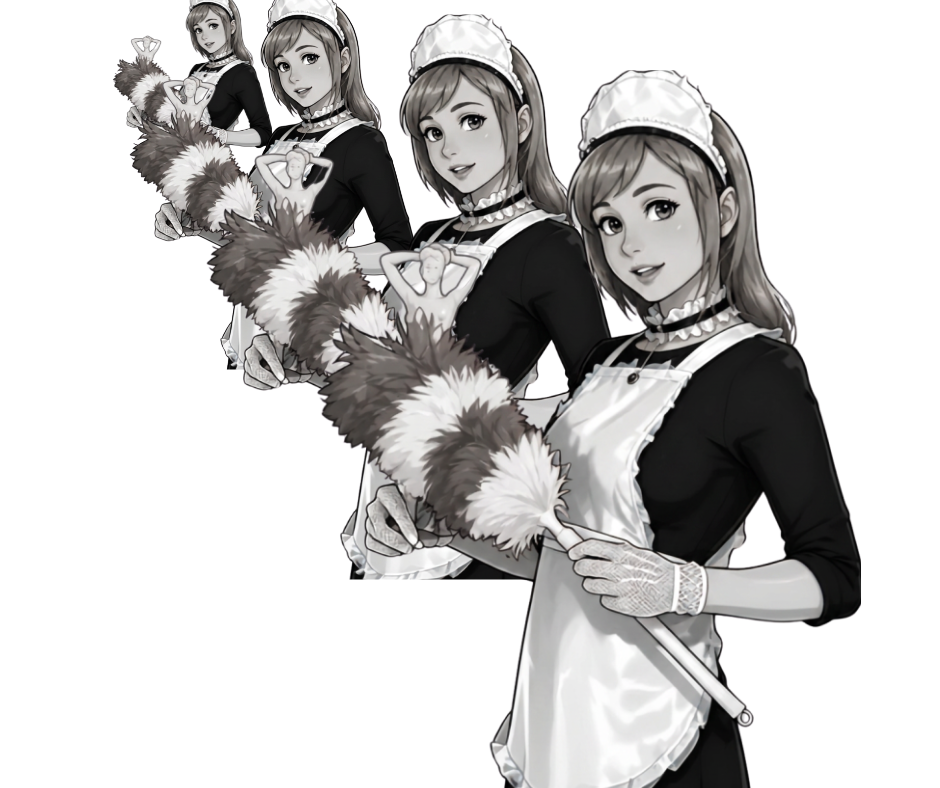
Schoolgirl and French Maid Uniforms
I get it. Britney Spears unlocked every boy’s fantasy in her famous ...Baby One More Time music video and, yes, many private high schools require uniforms.
However, these private schools with strict dress codes don’t allow cropped tops, plunging necklines and skirts so short a soft breeze would result in an arrest for indecent exposure.
Furthermore, the only US colleges where uniforms are worn are military and nursing schools. (I can’t speak for colleges in other countries.)
It was so refreshing to watch Study Buddy and The Line Between Love and Hate and see the girls dressed as typical college and high school students.
I’m sure it’s no accident that both projects were directed by women.
As for French maid uniforms, come on now.
I’ve been to my share of very wealthy homes — even a billionaire’s — and not once was anyone wearing one of these Frederick’s of Hollywood outfits.
Given that the audience for verticals is primarily women, I’m at a loss as to why this costume choice is constantly being made.
And yes, it’s a costume. There is no history of housekeepers actually wearing this hyper-sexualised garb as their standard uniform.
It’s degrading and distracting.
Miscarriages
If there is a pregnant character in a vertical, it’s only a matter of time before she’s on the floor or ground with blood dripping down her legs.
Whether it’s a fall, a push down the stairs or a shove into a table, rest assured there will be a trip to the ER, where the expectant mother is traumatised.
Depending on the story, the pregnancy will either be lost or barely sustained.
Miscarriages happen, and for the parents they can be devastating.
In some verticals, the loss of a pregnancy is necessary to the plot. In Mistaken Seed, True Luna, Avery’s miscarriage — though brutal and the result of horrific actions — drove the plot forward.
It did the same in another Anna DeRusso vehicle (coincidence?), I’m Having Babies in Economy, They’re Making Babies in First Class, where her miscarriage was the crux of the story.
These verticals, however, are few and far between.
Far more often than not, miscarriage is simply a plot device used to fill space.
The cavalier treatment is further evident in the lack of medical follow-up or aftercare and, most egregiously, when women are shown having sex within a day or two of the loss.
Pregnancy loss can absolutely be part of a story. But if you’re going to use something so devastating to create drama, surely it deserves to have consequences for the characters beyond filling another 90 seconds of screen time.
Maybe It’s Time for Some New Tropes
I’m not suggesting vertical dramas abandon tropes. Far from it.
There’s a reason we love them. Give me the interrupted kiss, the ridiculous accidental fall into someone’s arms and, yes, the occasional strategically dropped towel.
But when the same devices appear over and over again — particularly when they rely on humiliation, questionable consent or serious experiences like pregnancy loss — they stop feeling dramatic and start feeling lazy.
Vertical drama is growing fast.
Maybe its tropes can grow up with it.
Writer - Cat
About Cat
I’m a semi retired practicing attorney, I’ve been in solo practice for 35+ years. I’ve been battling a chronic illness for 18+ months and my down time brought me into the vertical world. I’ve always been a rabid fan of the arts, film, TV, and stage, a love nurtured by my late brother. My other brothers made me a rabid sports fan. Youngest of 5, with 5 nieces and nephews and 7 greats. I live with my dog, Monty outside of Boston in a coastal community.
This article is an opinion piece. The views and opinions expressed are solely those of the author and are based on the author's own observations and interpretation of publicly available content.
Publication by Vertical Drama Love does not constitute endorsement of every opinion expressed. Vertical Drama Love remains committed to encouraging thoughtful discussion on issues affecting the vertical drama industry while maintaining editorial independence.